
Mining
Fuel Cost Reduction, Emissions Control, and Maintenance Savings in Mining Operations Using Green Fuel Tabs
Mining operations—whether open-pit or underground—depend heavily on diesel fuel to power haul trucks, loaders, dozers, drills, and other auxiliary equipment. Fuel alone can account for 30–50% of a mine’s total operating costs, while emissions from heavy machinery are increasingly monitored by regulators and communities. At the same time, downtime caused by engine fouling, injector wear, and frequent Diesel Particulate Filter (DPF) regens drives up costs and reduces productivity. Green Fuel Tabs™, a solid organo-metallic catalyst that dissolves directly in fuel, offer a practical and cost-effective solution for the mining industry. By improving combustion efficiency, these tabs help fleets achieve 10–20% fuel savings, cut harmful emissions by up to 80%, and reduce maintenance demands—boosting profitability, compliance, and uptime.
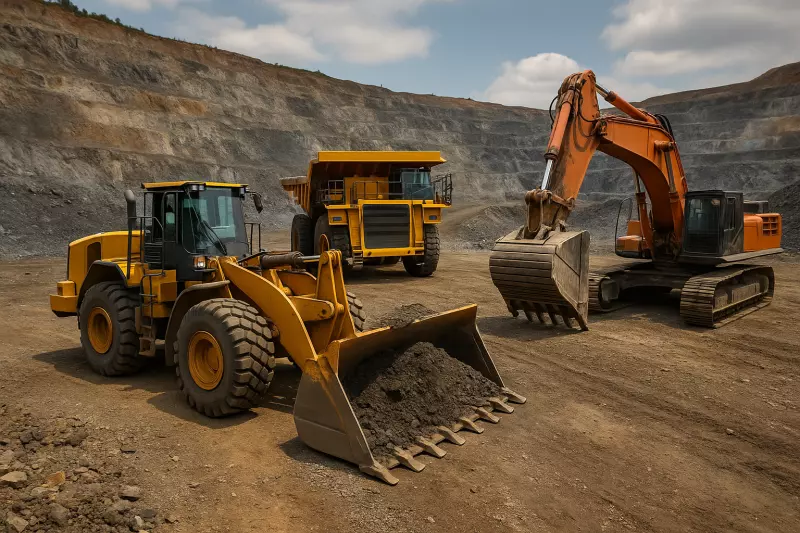
Fuel and maintenance challenges are significant across mining operations. In open-pit mines, ultra-class haul 000 to 4,000 gallons of diesel per day. Their continuous high-load cycles accelerate wear and lead to excessive fuel burn, while idling during loading and unloading adds waste and carbon buildup. Underground equipment such as load-haul-dump units, drills, and utility vehicles present their own challenges, often operating in enclosed spaces where diesel particulate matter (DPM) creates health and safety risks. Ventilation systems designed to clear fumes are costly to run, adding another layer of operating expense. Across the sector, rising fuel prices, tighter regulations, and sustainability demands from governments and investors make efficiency a top priority.
Green Fuel Tabs™ improve efficiency by lowering the ignition temperature of fuel from about 600 °C to 200 °C. This ensures more complete combustion, extracting greater energy from each gallon of diesel. Fleets can expect 10–25% improvements in efficiency, particularly under heavy-load conditions. More complete combustion also cuts emissions—reducing CO, HC, particulates, and lowering NOx formation—by as much as 86%. Cleaner combustion reduces soot buildup, which extends injector life, lowers DPF regeneration frequency, reduces oil contamination, and minimizes downtime.
The benefits extend across allts benefit from lower emissions and particulates, improving air quality for workers, reducing ventilation loads, and enhancing safety by cutting visible smoke. Support vehicles and ancillary equipment, from service trucks to graders, also see better fuel economy and reduced maintenance, lowering overhead costs across entire operations.
The financial impact can be dramatic. Consider a mid-sized open-pit mine operating 25 haul trucks, each burning roughly 3,000 gallons per day for 300 days a year. That adds up to 22.5 million gallons annually—an $84.4 million fuel bill at $3.75 per gallon. A 10% efficiency gain would save $8.44 million annually, while 15% savings would cut costs by more than $12.6 million. Maintenance savings add further value, with fewer costly DPF replacements (which can run $8,000–$15,000 each), extended engine rebuild intervals, and reduced downtime that keeps production on schedule.
Implementing Green Fuel Tabs™ can be done in a structured way. A pilot program begins by selecting a small group of haul trucks, LHDs, and support vehicles with known baseline data. Over 2 weeks, fuel use, idle time, maintenance events, and emissions are tracked. During a 30-day treatment phase, vehicles are dosed according to manufacturer guidelines, and the same data is collected. Results are compared to baseline, and improvements are annualized to show return on investment. If the pilot proves successful, the program can be scaled across the full fleet.
Compliance and safety are also addressed. Green Fuel Tabs™ are designed to meet EPA registration standards under 40 CFR Part 79, support compliance with MSHA particulate limits, and come with documentation for OEM compatibility. With proper training, handling, and dosing procedures, implementation is simple and safe for fueling crews.
For mining companies, the outcomes are clear. Green Fuel Tabs™ provide a pathway to multi-million-dollar annual savings, reduce supply-chain risks by lowering overall fuel demand, and improve productivity by minimizing downtime. They also help operations meet emissions regulations, improve workforce health and safety by reducing particulate exposure, and strengthen ESG reporting—enhancing appeal to investors and local stakeholders.
In conclusion, adopting Green Fuel Tabs™ across open-pit and underground mining fleets delivers tangible financial, operational, and environmental benefits. The technology integrates seamlessly into existing refueling practices, requires no equipment modifications, and produces measurable improvements in efficiency, emissions, and maintenance costs - making it a practical, low-risk solution for the mining industry.